Verb is a word that tells us what an object or a person does. Verbs shows action thus they are often know as Action Words. Examples of Verb are given below in the following picture.
The word 'possessive' mean to 'own'. One can either use possessive adjectives or possessive pronouns to denote ownership . There could be similar words used under the possessive adjectives and pronoun categories ;however, the usage is different.
Possessive adjectives are always followed by the noun they describe.
For example,
My book is kept on the table. His book is with the teacher.
Possessive pronouns are objects in the sentence.
For example,
The Toy kept on the floor is mine .
The book kept on the table is hers.
List of possessive adjectives and possessive pronouns are given below
Possessive adjectives are different from possessive pronouns
For example,
This is your (possessive adjective) and this is mine ( possessive pronoun).
Its (possessive adjective) taste is delicious. Their (possessive adjective) car is in the garage.
The car in the garage is theirs ( possessive pronoun).
Countable Noun
The things which we can count are said to be countable nouns. This means that they can be one or more than one of them. Also when a countable noun is singular we often add the articles ' a / an ' with it.
For example
1) I gave two books to my sister.
2) I would like to have an omelette for breakfast.
3) She gave a rose to her mother.
To summarise we can also say that countable nouns give answer to the question of "How many things" are available or required.
Uncountable Nouns
The things which cannot be counted,such as rice or water, are known as uncountable nouns. Uncountable nouns have a singular form, but when they are indefinite , we either use the word " some " or nothing at all instead of an article.
1) Shall I get some water for you?
2) I will have some curd rice in the afternoon.
Uncountable nouns give answer to the question of " How much quantity " something is available or required.
Before we learn about what is meant by Proper noun let us first know about what is noun.
NOUN is a word which is used for a person, place, animal or thing. Noun is often known as ' Naming Words'.
Nouns are classified into different categories. Common noun and proper noun are among them. Common noun refers to something which is is considered in general.
For instance when we say the word girl girl is a noun but it refers to any girl in general.
Some other examples of a common noun are Park Garden book dog peacock eraser.
Proper noun refers to the name of some particular person or place or specific things.
Example -
Mr Sanjay Panchal ( name of a person)
The Times of India ( name of a newspaper)
Ganga ( name of a river)
January ( months of year)
Monday( days of week)
Note - All Proper noun always begins with a capital letter no matter where it occurs in a sentence.
Today we are going to learn about the different Parts of Speech in English grammar . It tells us about the function of each word in the given sentence. Each word can be put into different categories according to the work they do in a sentence.
Parts of Speech is mainly divided into 8 categories
Let us learn about each of these categories in detail
Noun
Noun is a word which is used as name of a person , place, animal or things . Noun can be further classified as follows-
Proper Noun
Proper noun refers to the name of some particular person or place.
Example -
Mr Sanjay Panchal ( name of a person)
The Times of India ( name of a newspaper)
Ganga ( name of a river)
January ( months of year)
Monday( days of week)
Note - All Proper noun always begins with a capital letter.
Pronoun
Pronoun is a word used in place of a noun some examples examples of pronoun are he, she, it, you, they ,those ,them.
Verb
Verb is a word that tells us about an action or the work that is done at that particular time. Hence words are often known as action words.
Example - Run dance playing sleeping swimming.
Examples of Verb are given in the picture below.
Adjective
Adjective is a word that describes a noun or a pronoun. Therefore adjectives are often known as describing words.
Example -
What a beautiful dress .
Amaira ate some rice in the afternoon.
Can you fill little water in my bottle.
There were five eggs in the nest.
In the above examples beautiful, some, little, five are adjectives.
Adverb
Adverb is a word that tells us about how for when an action is done.
Example
Sonia ran quickly to win the race.
The teacher spoke to the children politely.
David was in a hurry to catch the bus.
We shall meet today.
In the above sentences the words quickly, politely ,hurry and today are adverbs.
Preposition
Preposition is a word that tells us about the position of a noun or pronoun at that particular time. Therefore pronouns are often known as position words.
Some of the commonly used prepositions are in ,under, beside, above, over, into, in front of ,behind etc.
List of some common prepositions are given in the picture below.
Conjunction
Conjunction are words that are used to join two words or two phrases or two sentences. Some of the commonly used conjunctions are and, because ,or, as ,until, so, although etc.
Interjection
Introduction of words which are used to express feelings or an expression or an emotion. All interjection words end with an exclamation mark.
Example -
Alas !
Hurray !
Wow!
Ouch!
Note -
Sometimes articles are also considered as one of the category of the different parts of speech
Articles
A, An and The are the three articles in English Grammar.
Given below is a picture form on how you can remember the different parts of speech in an easy way.
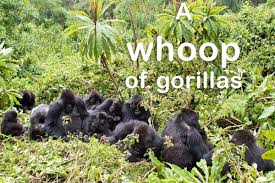
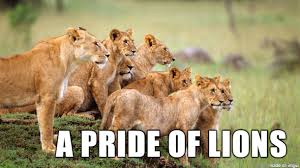
Collective noun is a word which is used to represent a group of people, places ,animals or things taken as a whole. Given below are a list of some of the common collective nouns.
Some examples of collective noun are given below which are commonly used under the category of People.
A class of students
An army of soldiers
A Choir of singers
A crew of sailors
A band of musicians
A bunch of Crooks
A crowd of people spectators
A Gang of thieves
A group of dancers
A troupe of artists
A troop of dancers
A pack of thieves
Staff of employees
A Regiment of soldiers
A tribe of natives
A panel of experts
A board of directors
Some of the examples of collective nouns which are used for animals are given below
A catch of fish
An army of ants
A flight of birds
A flock of birds
A haul of fish
A flock of sheep
A herd of deer/cattle/goats/buffaloes
Hive of bees
A litter of cubs
A host of sparrows
A team of horses
A troop of lions
Zoo of wild animals
A pack of wolves
A Swarm of bees/ants/rats/flies
A team of ducks/oxen
A murder of crows
A kennel of dogs
A pack of hounds
Some of the collective nouns which are used for things are given below.