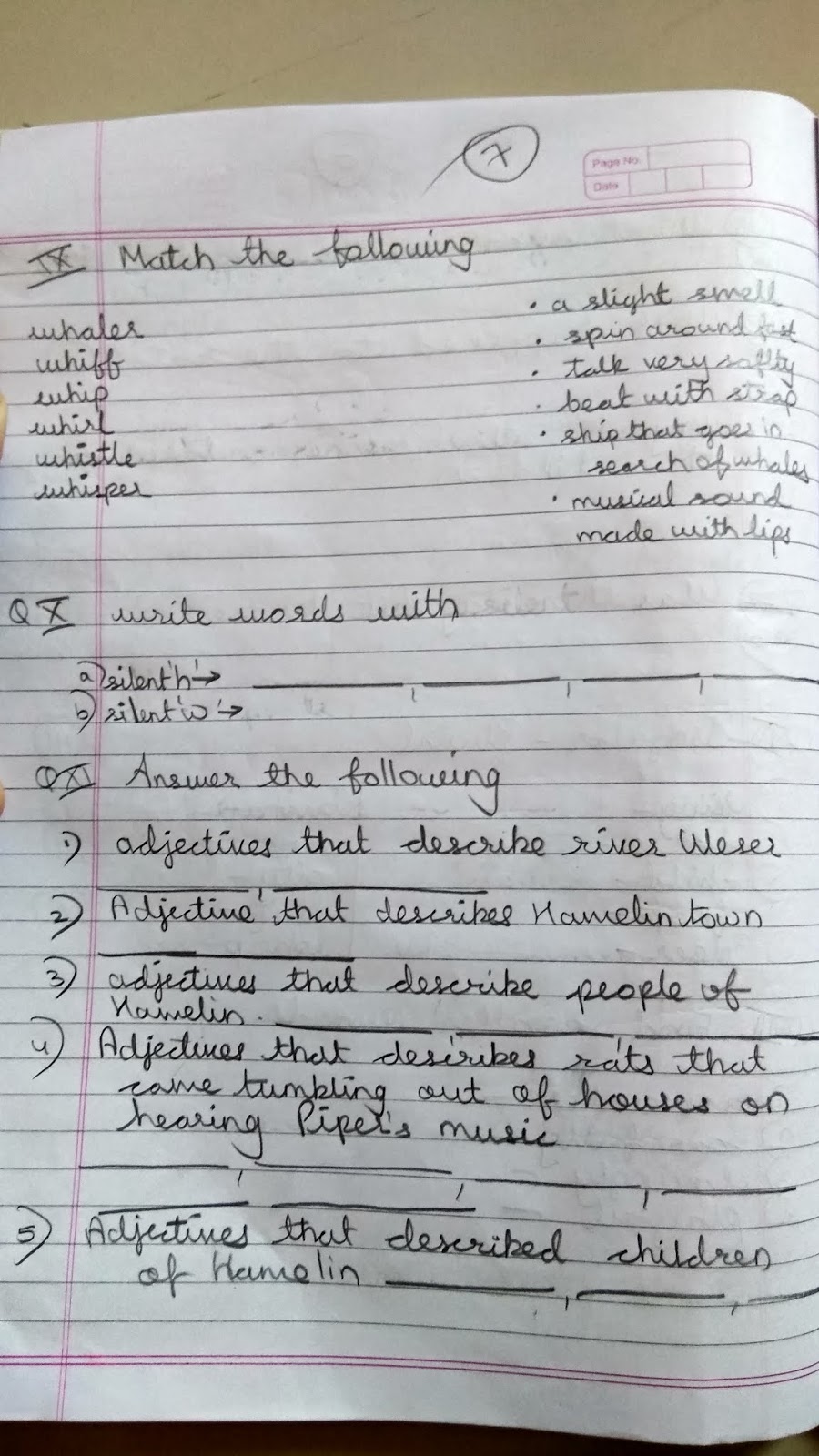
English worksheets for grade 3 of Maharashtra State Board final exam 2018-2019 for the following lessons from English Balbharti Textbook and English Course Book are given below.
Lessons
The noble Stag ( Balbharti)
The magical Kettle ( Balbharti)
As big as blue whale
Pied Piper of Hamelin
Two or more words with the same pronunciation but with the different meanings are called homophones. They can either have the same spelling or their spellings can differ. Given below are the list of some of the common homophones.
Difference between fish and fishes
As we all know that the plural of any word can be obtained by adding 's' or 'es' or following some basic rules of English grammar . But there are some exceptions too . The difference between the words fish and fishes can be explained in the picture given below.
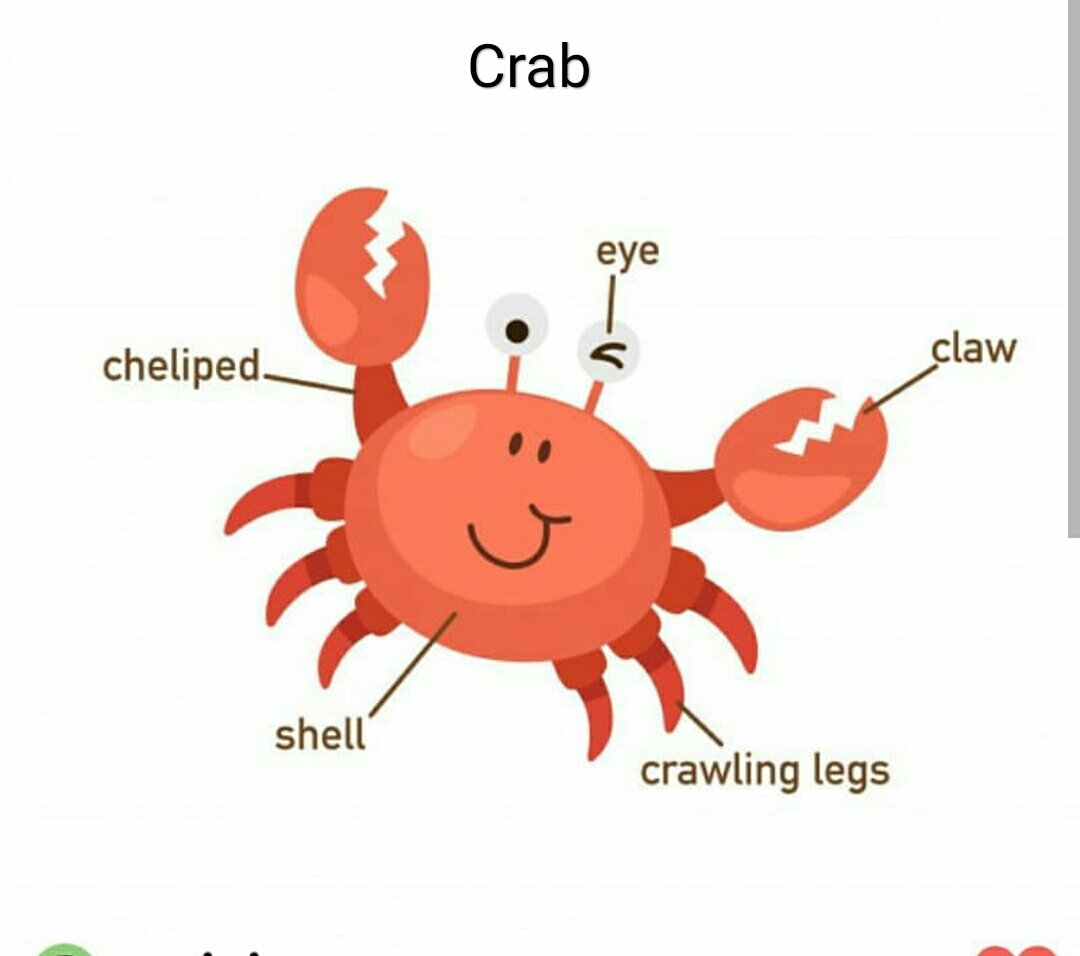
Body Parts of Animals.
We often teach our kids about different parts of the human body. Teaching them the same about animals can be fun too. Given below are different parts of some of the common animals and birds.
Many parents struggle to teach Cursive Handwriting to their kids. If you are one among them, then today's blog is extremely beneficial for you.
Start by teaching them some basic geometric shapes like straight line, horizontal line, curve, circle and oval
Then follow the order of letters in English Alphabets as mentioned below.This makes it extremely easy for the kids to learn and grasp the method of writing in cursive.
Prepositions are short words (on, in, to) which are usually placed before nouns (sometimes also in front of gerund verbs) . Prepositions show the relationship between a noun or a pronoun with the other words in the sentence. This means that , these words tells us where something is or when something happened at that point of time.
The picture given below shows an easy way to remember about how to describe the position of something at that particular time using Prepositions.
The following table contains rules for some of the most frequently used prepositions in English:
Prepositions – Time
English
Usage
Example
on
days of the week
on Monday
in
months / seasons
time of day
year
after a certain period of time (when?)
in August / in winter
in the morning
in 2006
in an hour
at
for night
for weekend
a certain point of time (when?)
at night
at the weekend
at half past nine
since
from a certain point of time (past till now)
since 1980
for
over a certain period of time (past till now)
for 2 years
ago
a certain time in the past
2 years ago
before
earlier than a certain point of time
before 2004
to
telling the time
ten to six (5:50)
past
telling the time
ten past six (6:10)
to / till / until
marking the beginning and end of a period of time
from Monday to/till Friday
till / until
in the sense of how long something is going to last
He is on holiday until Friday.
by
in the sense of at the latest
up to a certain time
I will be back by 6 o’clock.
By 11 o'clock, I had read five pages.
Prepositions – Place (Position and Direction)
English
Usage
Example
in
room, building, street, town, country
book, paper etc.
car, taxi
picture, world
in the kitchen, in London
in the book
in the car, in a taxi
in the picture, in the world
at
meaning next to, by an object
for table
for events
place where you are to do something typical (watch a film, study, work)
at the door, at the station
at the table
at a concert, at the party
at the cinema, at school, at work
on
attached
for a place with a river
being on a surface
for a certain side (left, right)
for a floor in a house
for public transport
for television, radio
the picture on the wall
London lies on the Thames.
on the table
on the left
on the first floor
on the bus, on a plane
on TV, on the radio
by, next to, beside
left or right of somebody or something
Jane is standing by / next to / beside the car.
under
on the ground, lower than (or covered by) something else
the bag is under the table
below
lower than something else but above ground
the fish are below the surface
over
covered by something else
meaning more than
getting to the other side (also across)
overcoming an obstacle
put a jacket over your shirt
over 16 years of age
walk over the bridge
climb over the wall
above
higher than something else, but not directly over it
a path above the lake
across
getting to the other side (also over)
getting to the other side
walk across the bridge
swim across the lake
through
something with limits on top, bottom and the sides
drive through the tunnel
to
movement to person or building
movement to a place or country
for bed
go to the cinema
go to London / Ireland
go to bed
into
enter a room / a building
go into the kitchen / the house
towards
movement in the direction of something (but not directly to it)